
Can AI Create a Dolby Atmos Mix? What Artists and Producers Need to Know
Can AI Create a Dolby Atmos Mix?
Yes — and it’s more capable than most people expect. But the answer is more nuanced than a simple yes or no, and understanding the difference matters before you decide how to deliver your next project in spatial audio.
In this article:
- What AI upmixing actually does
- Where AI Atmos performs well
- Where human engineers still win
- The two-path model
- Frequently asked questions
What AI Upmixing Actually Does
AI-powered Dolby Atmos upmixers analyze a stereo file and separate its elements into pseudo-stems — vocals, drums, bass, melodic content, ambience — using source separation models trained on large audio datasets. Once separated, each element is positioned as an independent 3D object in the Dolby Atmos sound field and rendered to an ADM BWF master file: the required delivery format for Apple Music Spatial Audio, TIDAL, and Amazon Music HD.
The entire process completes in minutes. No 7.1.4 speaker array required. No Pro Tools session. No specialist engineer.
This is exactly what the DPM Spatial Audio Converter does — and it works well for a wide range of use cases.
Where AI Atmos Performs Well
For most independent artists, catalog remastering projects, and content creators entering spatial audio for the first time, AI upmixing delivers results that are:
- Streaming-compliant — the output ADM BWF meets Apple Music, TIDAL, and Amazon Music HD delivery specs
- Fast — conversion completes in minutes, not days
- Accessible — no studio booking, no budget for a mix engineer required
- Optimised for headphone playback — which is how the majority of spatial audio listeners actually consume content
If you have a back catalog of 50 tracks that have never been released in Dolby Atmos, AI upmixing is the fastest and most cost-effective way to get them onto spatial audio playlists and into streaming platform editorial features.
Where Human Engineers Still Win
AI upmixing has real limitations that matter for high-stakes releases:
Creative intent
An AI model positions audio objects based on statistical patterns learned from training data. It doesn’t know that you want the lead vocal slightly elevated, or that the delay tail on the snare should arc left-to-right across the overhead plane. A human engineer working from stems can execute specific creative decisions with precision.
Stem quality dependency
AI source separation is imperfect. If your stereo master has heavy bus compression, dense low-mid buildup, or complex polyphonic textures, separation artifacts can appear in the Atmos output — smearing that wouldn’t exist in a clean stem-based mix.
Cinema and broadcast delivery
Film and TV Dolby Atmos mixes require loudness compliance, dialogue normalization, and often channel-specific deliverables (5.1 downmix, stereo fold-down) that AI tools don’t manage automatically.
Flagship releases
For a headline album, a sync licensing placement, or a project where the Atmos mix will be reviewed by press and industry, the difference between an AI upmix and a bespoke engineer-driven mix is audible — and meaningful.
The Two-Path Model
At DPM Production, we offer both approaches deliberately:
- AI Spatial Audio Converter — one-click stereo-to-Atmos upmixing via dolbyatmos.dpmsound.com. Free to use. Outputs a streaming-ready ADM BWF. Ideal for demos, singles, back catalogs, and creators entering spatial audio.
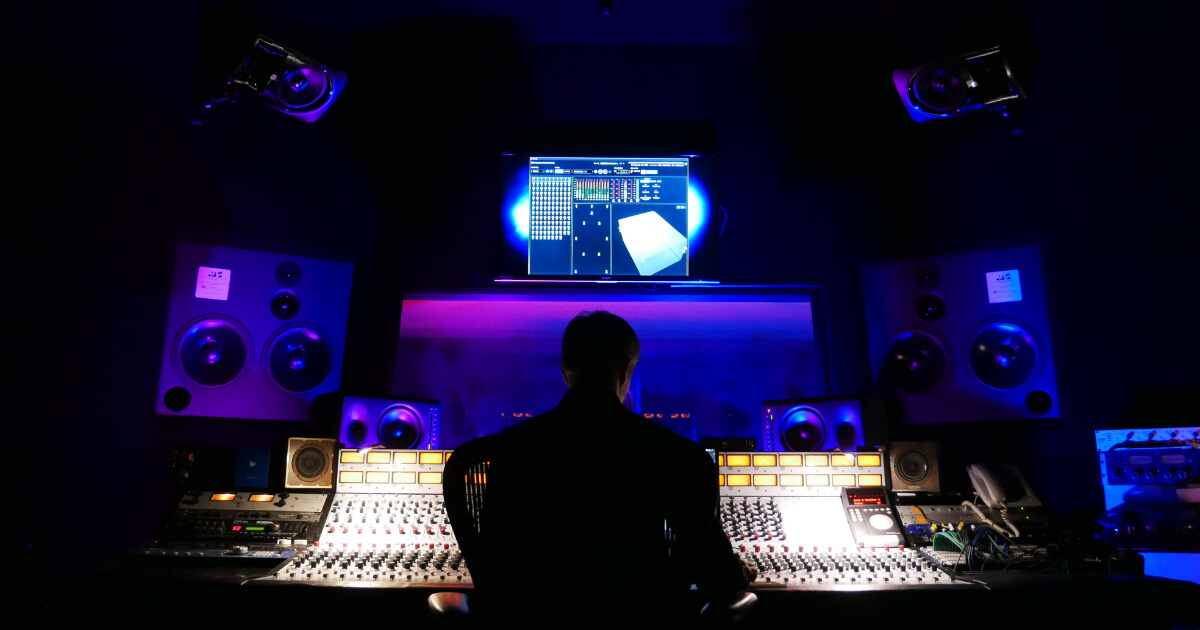
- Engineer-led Atmos mix from stems — our team works from your raw stems in Pro Tools with a calibrated 7.1.4 monitoring setup. Object placement is intentional, head-related transfer functions are tuned, and the final master is QC’d against Apple Music and TIDAL delivery specs. This is the right path for release-critical projects.
The right choice depends on your timeline, budget, and what the release demands. Not sure which applies to your project? Get in touch and we’ll give you a straight answer.
Frequently Asked Questions
Can AI convert an MP3 to Dolby Atmos?
Yes. The DPM Spatial Audio Converter accepts MP3, WAV, and AIFF files. WAV at 24-bit/48 kHz gives the best results, but MP3 files at 320 kbps convert well for streaming delivery.
Does the AI output meet Apple Music’s Dolby Atmos requirements?
Yes. The output is an ADM BWF file — the required format for Apple Music Spatial Audio submission.
Is the AI upmix the same quality as a studio Atmos mix?
No. An AI upmix is a good approximation optimised for speed and accessibility. A studio mix from stems is higher quality and allows full creative control. Both outputs are valid ADM BWF files — the difference is in the spatial depth and precision of the object placement.
How long does AI Atmos conversion take?
Typically 2–10 minutes depending on track length and file size.
Can I use the AI converter for a film or TV project?
For short-form content and demos, yes. For broadcast or cinema delivery requiring dialogue normalization and loudness compliance, contact DPM Production for an engineered mix.
What is an ADM BWF file?
ADM BWF (Audio Definition Model Broadcast Wave Format) is the standard delivery container for Dolby Atmos music. It packages all multichannel audio tracks and 3D object metadata into a single WAV-based file. Apple Music, TIDAL, and Amazon Music HD all require this format for Spatial Audio ingestion.
Bottom Line
AI can create a Dolby Atmos mix — a real, streaming-compliant ADM BWF that will play on Apple Music, TIDAL, and Amazon Music HD. For most artists and creators, it’s the fastest and most practical way to enter spatial audio. For projects where the mix itself is the statement, human engineering from stems is still the gold standard.
Ready to get started? Try the free Spatial Audio Converter or contact our team for a bespoke engineered Atmos mix.